

Faces Behind D8: Amy Ryan, Marsh's Library
For our latest Faces Behind D8, we step through the little gate on St Patrick’s Close to meet Amy Ryan, Visitor Services Manager at Marsh’s Library.
Amy arrived as a Friday afternoon volunteer, knowing little about the place. Eleven years later, she’s full of stories about its books, its visitors and the people who keep it going. From reading cages and stolen volumes to film crews and a missing LEGO sign, our conversation reveals the unexpected sides of life in this historic library.
We spoke about her favourite discoveries, the complicated character of founder Narcissus Marsh, and living and working in Dublin 8. Through it all comes a simple invitation: take your time, absorb the atmosphere and talk to the staff.

Amy Ryan at Marsh's Library. Photo credit: Aarif Amod
Amy, how did you find your way to Marsh’s Library, and what first drew you to the place?
I’d never heard of it! We still get people coming in who say they’ve walked past it or never knew it was here. So I was the same.
A friend had volunteered here briefly when we were undergraduates at UCD. I studied English and Drama Studies, and I was about to start a master’s in American literature, something completely irrelevant to here! I was looking for part time or volunteer work to get experience in an arts or heritage setting. My friend said, “Why don’t you put in for that Marsh’s place?”
I sent in my CV, but I still don’t think I quite understood what they did. I was just like, “Yeah, it’s a cool library!” At the interview, I remember thinking, “This building is amazing. These people seem very nice.”
I started volunteering on Friday afternoons. After a year, they needed somebody on Saturdays, so I started doing paid hours. More hours came up gradually, and about two and a half years after starting, I was full time. I’ve been here eleven years now. I haven’t left!

Inside Marsh's library. Photo credit: Tristan Hutchinson
What does your role as Visitor Services Manager involve, and what’s your favourite part of the job?
A lot of it is literally just being here! Oisín, my supervisor, and I do a lot of crossover work: opening the building, organising volunteers, looking after tour bookings, welcoming visitors and supervising the galleries. We look after the gift shop and ticket income, and I do a lot of the health and safety work too.
Then it’s whatever crops up. Sometimes you’re saying, “We need to get ready for a VIP visit,” and five minutes later it’s, “Guys, the toilet’s broken!” We do both ends of the spectrum.
My favourite part is the interaction with visitors. We’re very fortunate. Libraries attract very nice people! People come because they’re interested in books and history, or they’re curious about the place. Being beside St Patrick’s Cathedral helps people find us too.
And my colleagues are a big part of why I’ve stayed. Everyone cares about this place and works very hard for it. Getting on with your colleagues is something you can easily take for granted, but it makes the day to day stuff pretty easy.

Inside Marsh's library. Photo credit: Tristan Hutchinson
Do you remember your first impression of the library? Has the way you see it changed since working here?
Definitely the smell. It’s very distinct, and people comment on it a lot. It’s a fantastic smell. I can’t smell it anymore! Except when I go into one of the rooms that’s usually closed off. When we returned after being away during COVID, I could smell it again for a few days. Then it went away!
Little things have changed. The front landing was bright red when I started. When it was repainted, I didn’t even notice because we’d had new carpet. I said, “Oh, we got new carpet,” and they said, “Did you not notice outside got painted?”
So little things change, but a lot stays the same. It’s an old building, and that’s our hook!

Inside Marsh's library. Photo credit: Tristan Hutchinson
What’s your favourite place or detail in Marsh’s Library?
I love the Second Gallery. We don’t spend as much time there because we’re needed at the front door or where visitors have questions. During winter, it’s freezing too. Having someone stationed there would be cruelty!
When I’m giving a tour, I sometimes stop halfway down and think, “It really is a beautiful building.” You’re seeing it from different angles.
I love the cages as well. Originally, people studied in the bays throughout the library. Then a stock check revealed that hundreds of books were being stolen.
The cages were an alternative space for readers. I think their use could depend on the librarian. If you were a first time reader and they didn’t know you, you could be locked in. You had a bell to ring when you were finished. We still have it!
People sometimes say the cages held the most valuable books, but as far as I’m aware, there’s nothing written down to suggest that. It seems to have been more about the reader.
There’s also a cast of Esther Johnson’s skull, Stella, as Jonathan Swift called her. First of all, I have to disappoint you: it’s not a real skull! That’s always the biggest disappointment for primary school children.

People often arrive knowing it’s a historic library. What tends to surprise them once they’re inside?
The books! We get couples where one person loves libraries and the other says, “I’m just here to support them. I don’t really read.”
Then you say, “We have books that were shot, and you can see real bullet holes from over a hundred years ago.” The other person goes, “What?” Now we have something for both of them!
There’s unexpected stuff in the collection. A lot of Bibles, religious commentaries, and commentaries upon those commentaries! But also philosophy, travel, natural history, medicine, witchcraft and alchemy. There are fantastic anatomy books with massive foldouts. It’s class.
People are surprised that earlier readers wrote in the books. They think of them as fancy and important, but people were always still people.
The LEGO hunt is a nice cherry on top. People come for the exhibition, then spend longer here looking for the figures.
And people don’t always realise it’s still a functioning library. Researchers can use the books by appointment. We have to balance access with conservation, but they don’t just stay on the shelves. For me, that’s one of the best things about it.

Lego hunting at Marsh's Library
Is there a book in the collection that you’ve become particularly fond of?
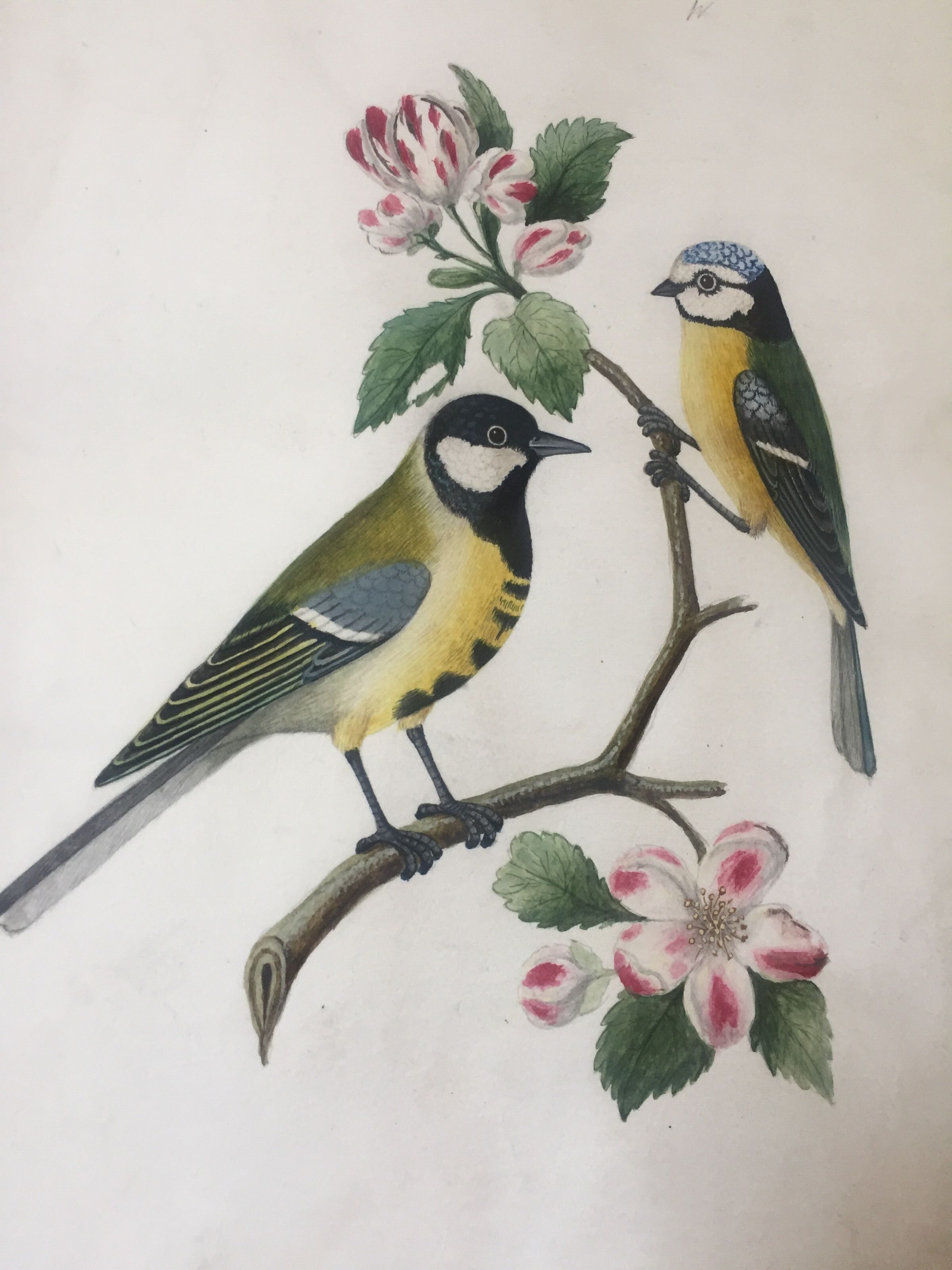
There are a few, but I love Eleazar Albin’s watercolour pictures of birds, which he made with his daughter Elizabeth. I’m not particularly into ornithology, but these are stunning. They’ve lasted beautifully over the centuries, still very bright and vibrant.
One of my favourite things is that the loose sheets were later taken to a binder, who clearly did the most minimal aspect of his job! When he cut them to size, he sliced some of the birds’ names off completely. On others, you can just see the top half of the word.
It’s as though he said, “You said bind these into a book, and I did!” I find it very funny.
You described Narcissus Marsh as a complicated character. What should we know about the founder?
When I started learning about him, I thought, “What a curious guy.” He was an English clergyman with a massive passion for languages, and he seemed very stern and serious.
He became Provost of Trinity in 1679 and did not like it! Jonathan Swift was an undergraduate while he was there, and they didn’t like each other. When I clocked that student and teacher dynamic, I thought, “That explains so much!”
But Marsh also questioned how people outside the college were supposed to educate themselves when its library was only accessible to staff and students. He thought the city needed a public library. Later, as Archbishop of Dublin, he funded the building here.
One question we get is, “Who was the public?” The 1707 Act described “graduates and gentlemen”, which is a narrow view. Originally, I took a rose tinted view: “He didn’t mind if women and Catholics came in.” Possibly true, but he might also have assumed they wouldn’t come anyway. It’s hard to know where he stood.
Then you have his encouragement of Irish language learning. He also wanted books across different fields, including things he wouldn’t personally agree with. He’s tricky to pin down.
But he left a legacy: a library more than three hundred years old that’s still being used. That’s pretty incredible.

A portrait of Archbishop Narcissus Marsh by artist Hugh Howard hangs in the library
Are there other stories from the collection that you particularly enjoy telling?
Book theft is always interesting because people don’t anticipate it. These weren’t necessarily people stealing to feed their families. There were people with money and education taking books to sell them.
We’ve had to buy back our own books. On one, you can see where somebody tried to remove the library stamp and Marsh’s own ownership mark. We could point those out, and the bookseller’s response was basically, “It’s still twenty pounds!”
Books still turn up. In 2012, Patrick Gageby bought an old book in a junk shop in Harold’s Cross. At home, he found our stamp, looked us up and realised we still existed. He brought it back, completing a set of five volumes with a book missing for over a hundred and fifty years.
Then, during our exhibition about stolen books in 2017, a clergyman recognised that he might have one at home. He returned a Book of Common Prayer missing since the 1820s.
So keep an eye out. They’re still out there!

At the opening of The Medieval Manuscripts of Marsh’s Library Exhibition
Is there a visitor encounter or moment here that has stayed with you?
Yes, although technically, he wasn’t a visitor!
We had a lovely sign advertising our LEGO hunt, made by our education officer Julie. I could see a man on the camera photographing it. Then he stepped forward and ripped it off the stand.
I got someone to cover me and walked out after him. People say, “Amy chased him,” but I just walked a bit fast!
I asked, “Were you just in the library?” He said, “Oh, do you want it back?” As though taking it was normal. He’d folded it, so we needed a new one anyway. But I thought, “I’m not letting him take that. Julie worked hard on that.”
Thankfully, most encounters are lovely. There was an American couple who made a point of travelling after she’d been very ill. They were so complimentary about my explanation of the 1916 Rising that they offered me a free stay on their ranch.
I haven’t gone. A mysterious ranch in the middle of the States could be the start of a horror film! But they were very lovely.

D8 Lego Writers at Marsh's Library
Marsh’s has also appeared on screen. What’s it like working with film crews?
I really like it. It’s something you don’t anticipate when you start volunteering here!
People love filming around the cages, but the doors are delicate, so I have to be strict. Somebody always wants to push one open a little wider.
Before my time, they filmed a scene from Michael Collins here. The Second Gallery stands in for Dublin Castle, with Liam Neeson and Stephen Rea having a conversation. The biggest thing we’ve had was the David Letterman documentary with Bono and the Edge.
Crews arrive hours before the people being filmed to set up lights and sound. Then they have to wait. So we say, “Want to see some bullet holes?” They go, “What?” Suddenly we’re giving them a little tour. They really appreciate it.
What’s an event at the library that you especially enjoyed being part of?
Culture Night is a big one. It’s exciting being here in the evening, lots of volunteers can help, and people are so happy coming in and leaving.
Culture Date with Dublin 8 has been really class for making connections with other venues. I’ve learned more about the area and thought, “There is so much here.”
I love Halloween, so Bram Stoker is fun. We dress in costume! For evening tours, we dim the lights and put little LED candles throughout the shelves.
In January, we did two evening tours with Teeling. We’d wanted to collaborate because they’re down the road. We advertised it along the lines of, “Have a hot drink in the coldest place in Dublin!”
People had a tour and whiskey tasting upstairs, then came downstairs to a heated room for a hot whiskey. They said it felt very special.
We enjoy those events, but we’re a small core team and rely on volunteers, so we have to be careful about how much we take on.

Launch of Culture Date with Dublin 8, 2026, with Terry O'Neill, Niamh Ní Charra and Bittersweet Josh. Photo by Marc O'Sullivan
What does it mean to you to work in this part of Dublin 8?
When I started, I lived in Stoneybatter, another historic area. I felt privileged to live on one side and work on the other. Then I moved into Dublin 8, so I’m here all the time. It’s an incredible neighbourhood.
It can be conflicting, seeing it being gentrified and prices going up. What is that doing to the people who built this area? It’s historically working class and getting less friendly towards the working class.
But you see independent shops and people supporting them. I think if you live in an area, you have a duty to try to do that.
Then there are these historic places still thriving. I work in a building that’s been functioning for more than three hundred years.
You explain your job and people say, “That’s really cool.” You try to be modest, but you’re thinking, “It is actually really cool. Sorry, I have a great job!”

Amy Ryan at Marsh's Library. Photo credit: Aarif Amod
When someone leaves Marsh’s Library, what do you hope they take away from the experience?
I just hope they’ve had a positive experience. This isn’t a fast paced environment. Take your time, read, absorb the atmosphere.
Above all, talk to the staff. There’s only so much we can display and only so much text people want to read. We joke, “We’re your audio guide!”
Give us your questions. We get new ones all the time, and if we don’t know the answer, we’ll try to find out.
People love the building and its history. It’s nice if we’ve added that personal touch as well.

Schoolchildren Emer Ní Mhuireagáin,Síomha Ní Mháirtín and Hannah Nic Carlais at the launch of Culture Date with Dublin 8 2026. Photo credit: Marc O'Sullivan
Quick Fire Round
A book you’re reading at the moment:
Yesteryear by Caro Claire Burke. I’ve just joined my first book club and started it last night. I’m already hooked.
A writer or book you’d recommend to a friend:
Anxious People by Fredrik Backman
Your favourite fun fact about Marsh’s Library:
An Egyptian mummy was found in a cupboard here in the late 1880s. Nobody knows for certain how he got here. He was nicknamed Maurice, and he’s now at Trinity College.
Favourite Dublin 8 haunt or hidden gem:
Kevin Street Library. I also loved visiting St Audoen’s Church on a tour. It’s one of those places you can walk past without realising how much is there. And Dudley’s is great too.

Amy Ryan at Marsh's Library. Photo credit: Aarif Amod
Marsh’s Library’s latest exhibition explores the fascinating world of medieval manuscripts, revealing the extraordinary artistry, craftsmanship and knowledge preserved in these centuries-old books. The exhibition is now open to visitors, offering a wonderful opportunity to discover another hidden treasure in the heart of Dublin 8.
Marsh’s Library is open for visitors:
Tuesday–Friday: 9:30am–5:00pm
Saturday: 10:00am–5:00pm
Sunday, Monday & Bank Holidays: Closed
Location: St Patrick’s Close, Dublin 8, D08 FK79